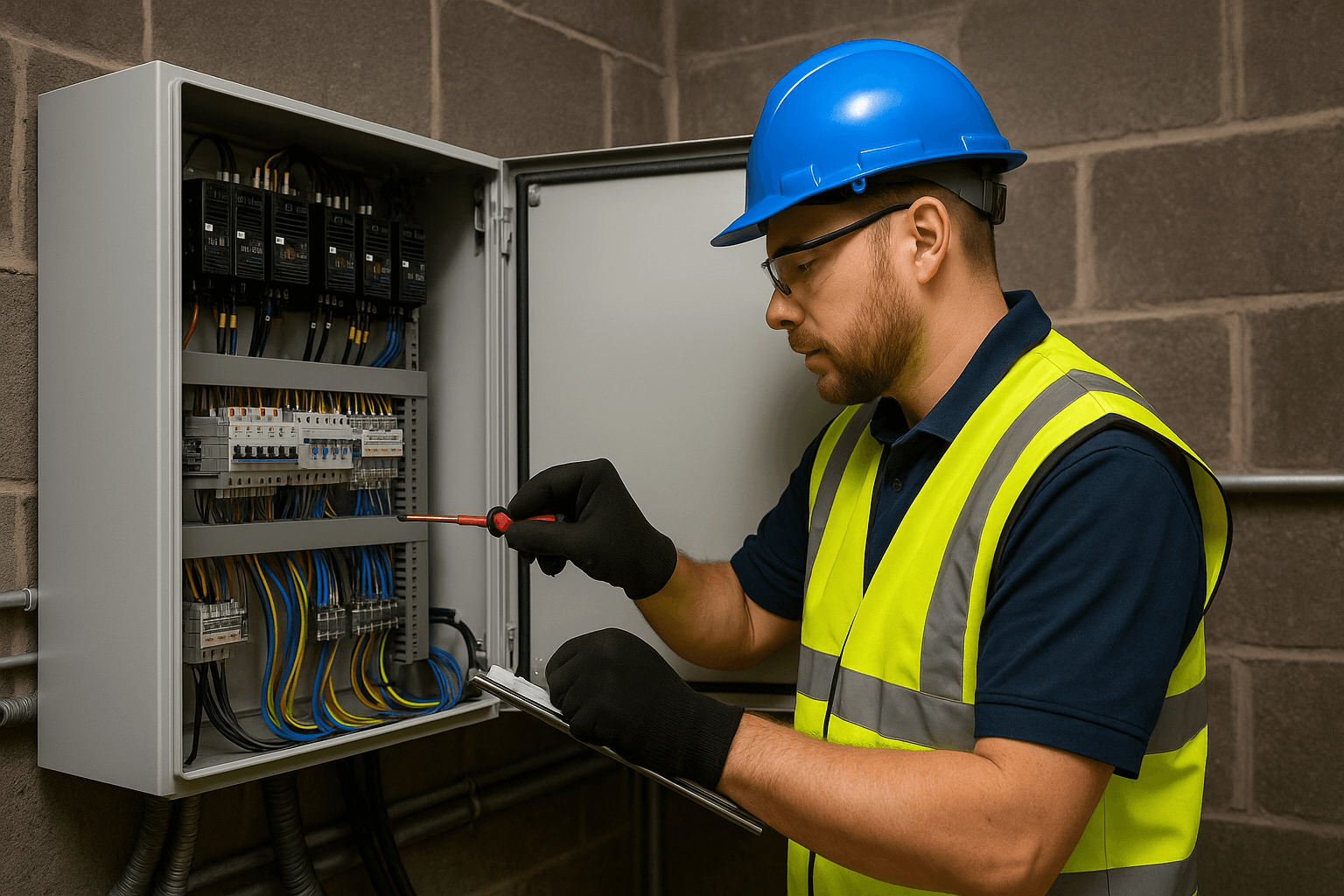
Faulty or Damaged Breakers

Circuit Breaker Replacement in Salt Lake City, UT

When a circuit breaker has failed, been damaged, or is the wrong type for its circuit, it needs to be replaced with a compatible breaker. We provide circuit breaker replacement in Salt Lake City, UT after first checking whether the breaker itself is the problem, so a working breaker is not swapped out while the real fault stays on the circuit.

Call 385-290-3821 to tell us which breaker is giving you trouble, or send us a message.

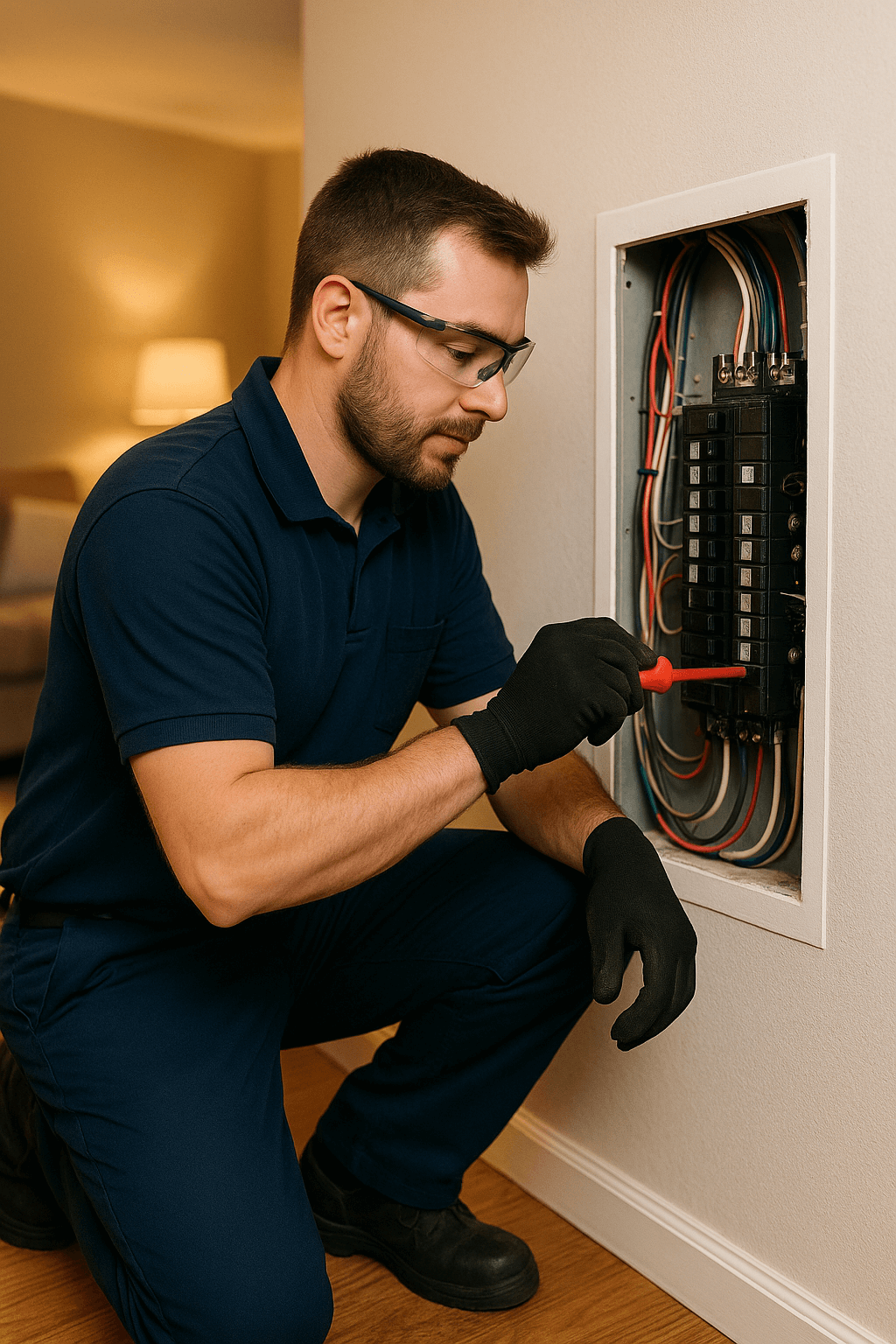
Electrician testing a circuit breaker panel in a home

When a Breaker May Need Replacing

A circuit breaker is an automatic switch that cuts power to a circuit when it senses too much current. Most breakers work for years without attention. Replacement may be appropriate when testing shows a breaker no longer trips or resets as it should, when its housing is cracked or scorched, or when it is covered by a manufacturer recall.

Replacement can also come up when a breaker is the wrong type for the panel or the circuit. A breaker that is not listed for use in that panel, or that does not match the circuit, may need to be changed even if it still switches on and off.

Signs that call for a professional assessment include a breaker that will not stay on, a breaker that feels hot, a burning smell near the panel, a handle that feels loose or will not latch, and visible damage around the breaker. If you notice smoke, sparks or heat at the panel, keep everyone away and do not open the cover. If there is fire, leave the building and call 911.
A Tripping Breaker Is Not Always a Faulty Breaker

Breakers trip to protect the wiring behind them. Before any breaker is replaced, the reason it trips needs to be found.

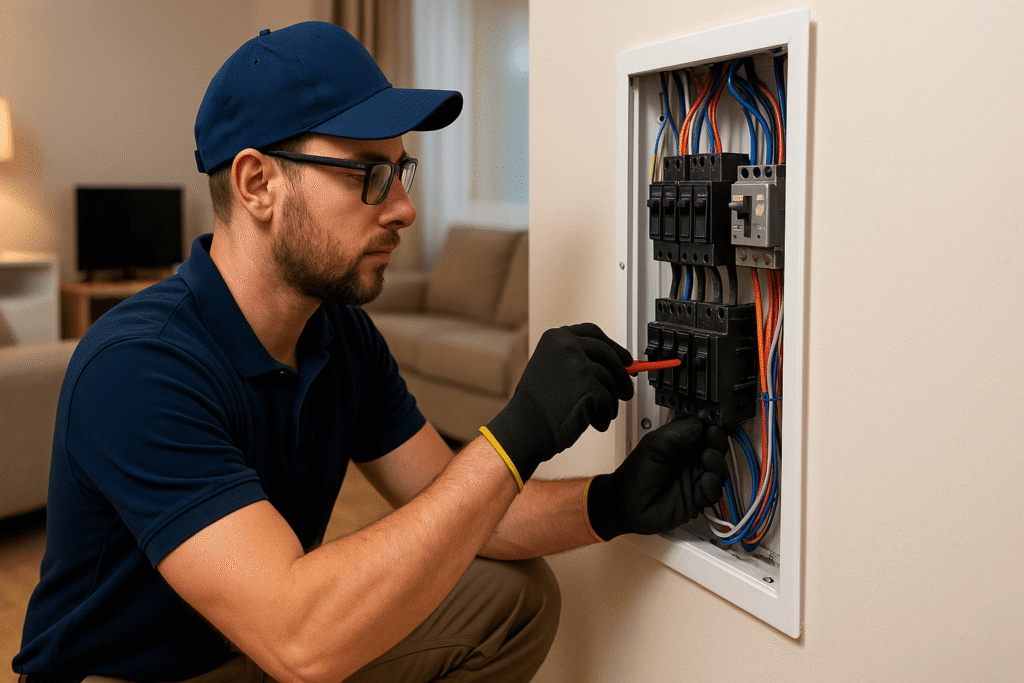
Electrician working on a residential breaker panel

Overloaded Circuits

Too many appliances on one circuit can draw more current than it is rated for. The breaker trips because it is doing its job. Moving some of the load or adding a circuit may be the fix, not a new breaker.

Electrician working on wiring inside an electrical panel

Short Circuits and Ground Faults

Damaged wiring, a faulty appliance or a problem at an outlet can cause a sudden fault. A new breaker would keep tripping until that electrical fault is found and corrected.

Electrician checking circuit breakers in a large electrical panel

A Breaker That Has Failed

Sometimes the breaker itself is worn or damaged. It may trip with very little load, refuse to reset, or fail to trip when it should. In that case, replacing the breaker is usually the right step.

Breaker Compatibility

Why the Right Replacement Breaker Matters

Circuit breakers are not interchangeable. A replacement needs to be a type the panel manufacturer allows for that panel, and its rating has to suit the circuit wiring. Breakers that look alike can sit loosely on the bus bar, make poor contact, or fail to protect the circuit as intended.

Installing a higher-rated breaker to stop a circuit from tripping is unsafe. The breaker is matched to the wire size, so a larger breaker can let the wiring overheat before it trips. If a circuit trips because it carries more electrical load than it was designed for, the answer is to correct the load or the wiring, not to weaken the protection.

Some circuits use GFCI or AFCI breakers, which add protection against ground faults or arcing. The type of protection already on a circuit is taken into account when choosing a replacement.

Counterfeit parts are another concern. The U.S. Consumer Product Safety Commission has announced recalls of counterfeit circuit breakers that can fail to trip when overloaded. That is one more reason a replacement breaker should come from a reliable source and be checked against the panel before it is installed.

Electrician in a hard hat working inside an electrical panel
Smiling electrician wearing an orange hard hat

Breaker Replacement or Panel Repair?

Replacing one breaker makes sense when the panel is in sound condition and the problem is limited to that breaker. If several breakers are affected, or there is corrosion, scorching on the bus bar, loose connections or other damage inside the panel, the job may be bigger than a single breaker. In that case, electrical panel repair may be needed before a new breaker can work properly.

Some older panels use breakers that are hard to find. When a compatible replacement is not available, we explain the options so you can decide what to do next. When the cause of tripping is unclear, electrical troubleshooting helps find it before any parts are changed.

Breaker replacement is not a DIY task. Parts of a panel stay energized even with the main breaker off, and a breaker that is seated poorly can overheat. It is work for a qualified electrician, and it is part of what we do as an electrician in Salt Lake City.

FAQs

Circuit Breaker Replacement FAQs

Common questions about replacing a circuit breaker.

Usually you can’t tell from the breaker alone. A breaker that trips may be reacting correctly to an overload or fault. An electrician checks the breaker and the circuit together to find which one is causing the trouble.

No. The breaker rating is matched to the wiring it protects, and a larger breaker can allow that wiring to overheat. Frequent tripping should be investigated so the cause can be corrected.

Not necessarily. A breaker needs to be compatible with the panel and suited to the circuit. One that fits physically but is not designed for that panel may not make a secure connection.

We don’t recommend it. Panels contain parts that stay energized even when the main breaker is off. Breaker replacement should be handled by a qualified electrician.

Availability varies by panel make and age. If a suitable replacement is not available, we explain the options, which may include repairing or replacing the panel.

It depends on the type of breaker, whether compatible parts are available, and whether the assessment finds other problems in the circuit or panel. We can give you an estimate after looking at the situation.

Need Our Help

Contact Us About Circuit Breaker Replacement

Let us know which breaker is affected and what it has been doing. Call 385-290-3821 or email info@electriciansaltlakecityutpro.com.