Outlet Problems

Electrical Outlet Repair in Salt Lake City, UT

An outlet that has stopped working, feels warm, sparks or will not hold a plug needs attention before it is used again. We offer electrical outlet repair in Salt Lake City, UT, starting with finding out whether the fault is in the outlet itself or somewhere else on the circuit, then correcting what we find.

Call 385-290-3821 to describe what the outlet is doing, or send us a message.

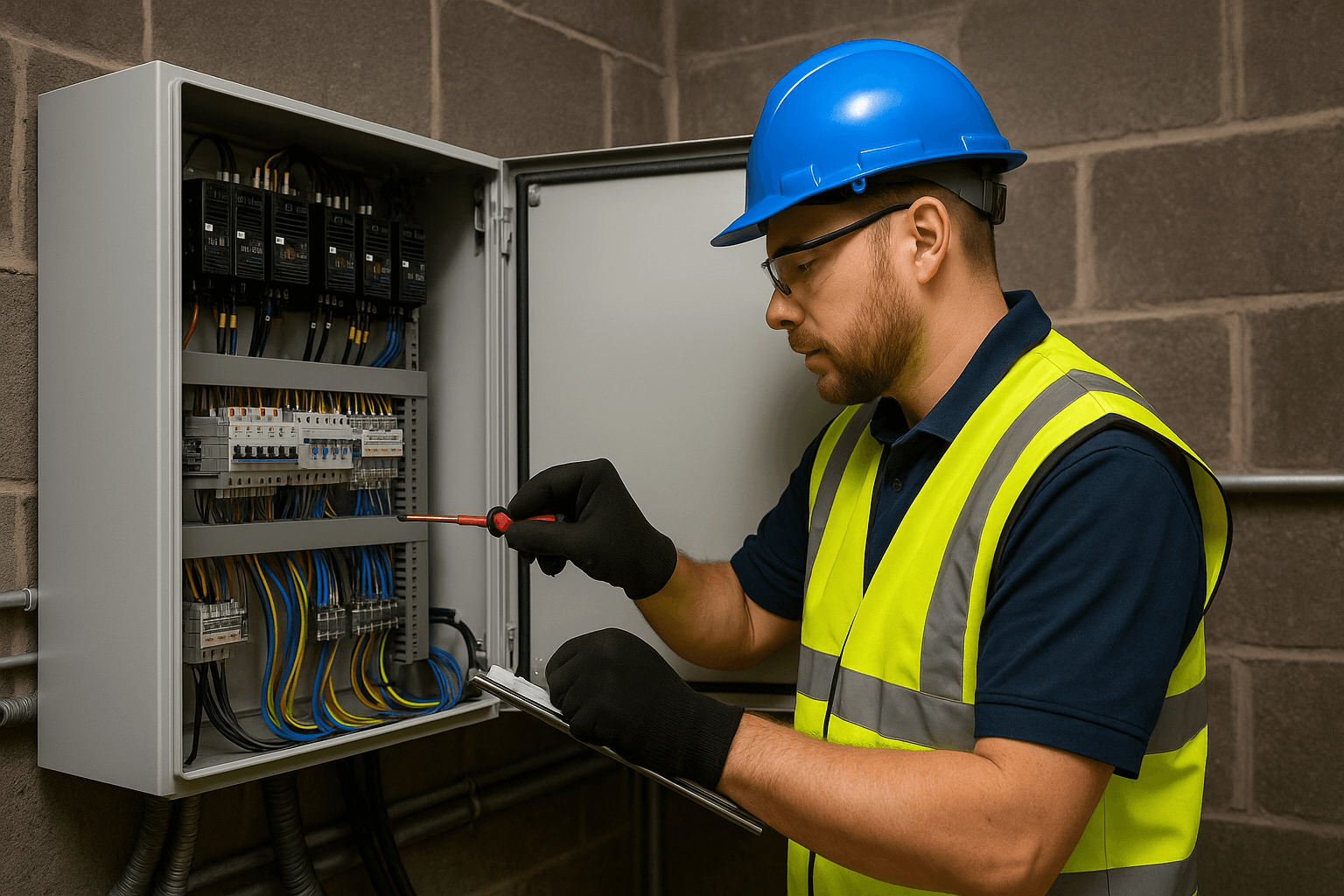
Electrician working on wiring inside an electrical panel

Outlet Warning Signs Worth Taking Seriously

Some outlet problems are easy to spot, like a cracked cover plate or a receptacle pulling away from the wall. Others are easy to live with for too long, such as plugs that slide out on their own or an outlet that only works some of the time.

Signs that an outlet should be checked include a receptacle or cover plate that feels warm, buzzing or crackling, scorch marks or discoloration, a burning smell, and sparks when something is plugged in. The U.S. Consumer Product Safety Commission’s home electrical safety checklist notes that unusually warm outlets may indicate an unsafe wiring condition and that loose-fitting plugs can cause overheating.

If an outlet is hot, smoking or sparking, stop using it and keep people away from it. Do not try to open it. If there is smoke or fire, leave the building and call 911.
Why an Outlet Stops Working

A dead outlet is not always a bad outlet. The cause can sit anywhere along the circuit.

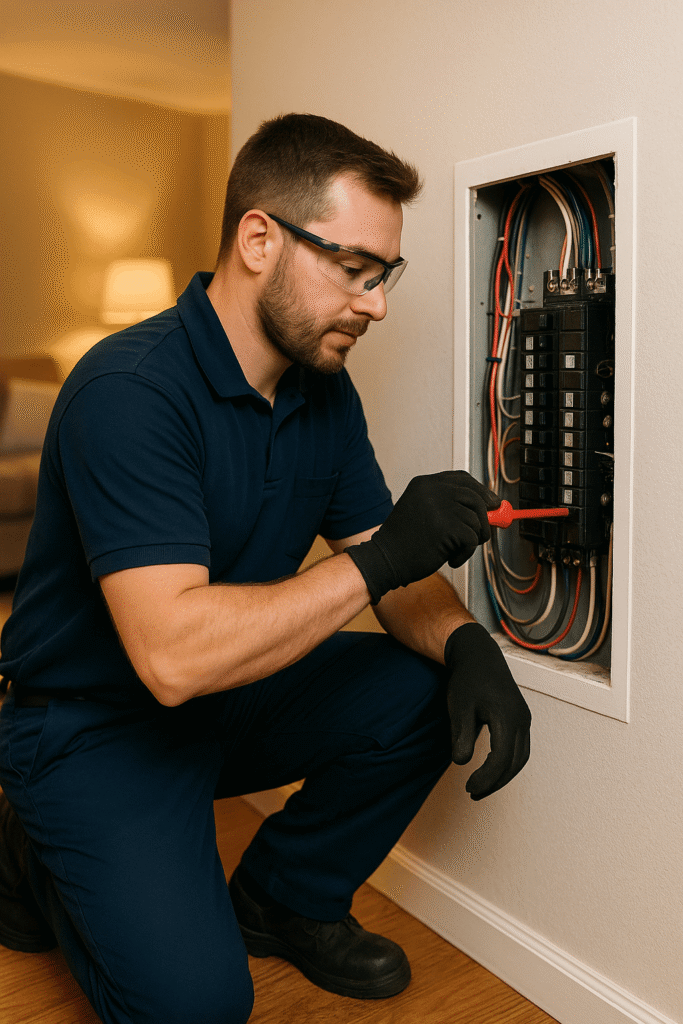
Electrician testing a circuit breaker panel in a home

A Tripped GFCI or Breaker

Many outlets are protected by a GFCI device that may be in another spot, even another room. When it trips, outlets downstream lose power too. If a GFCI or breaker trips again after being reset, the circuit should be checked.

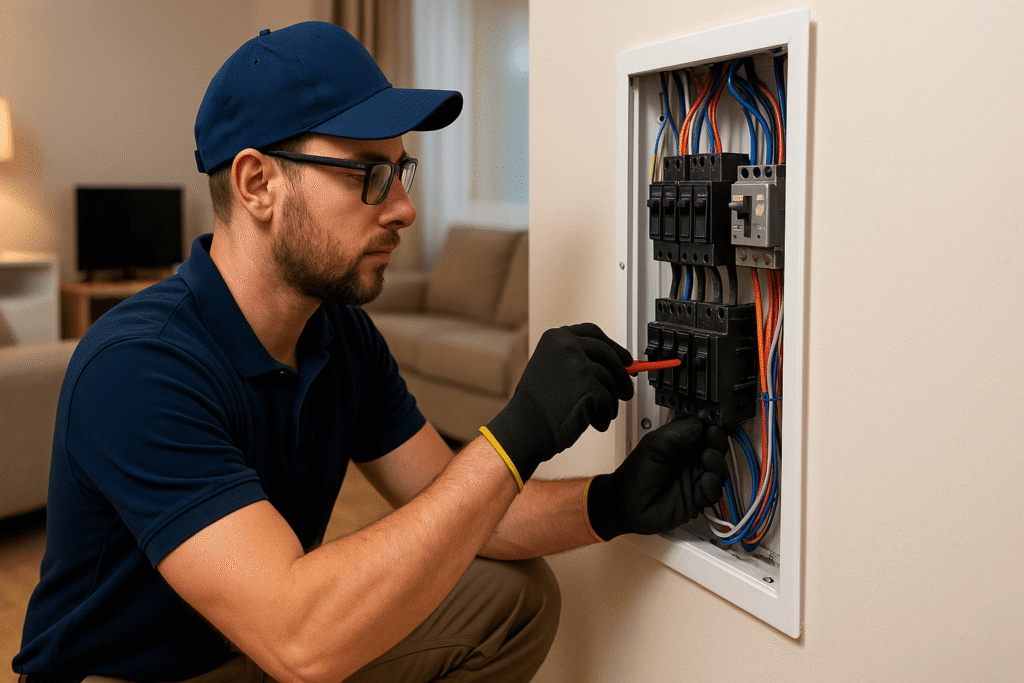
Electrician working on a residential breaker panel

A Loose or Failed Connection

Connections at the outlet, or at another outlet on the same circuit, can loosen over time. This can make power cut in and out and can create heat at the connection point.

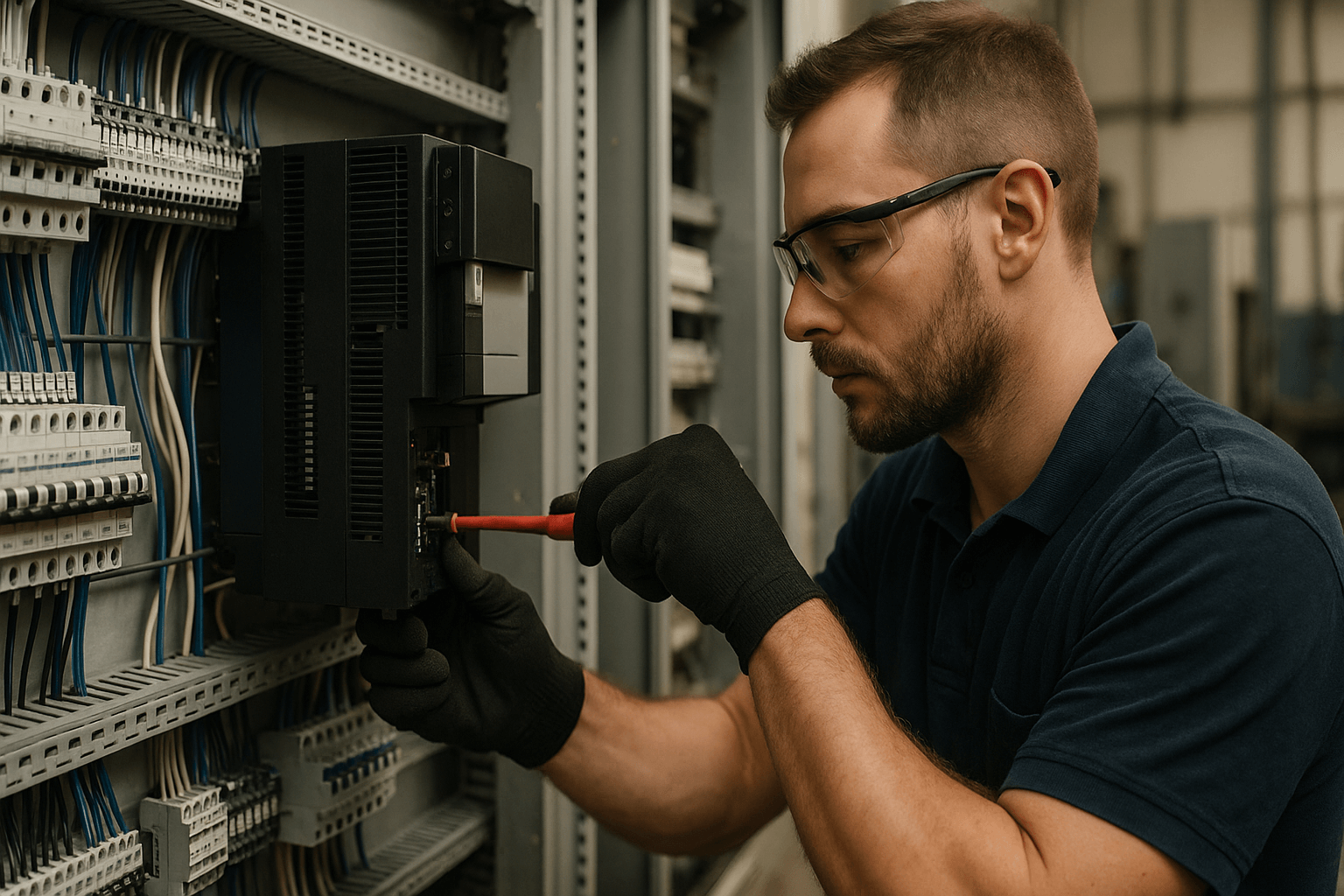
Electrician checking circuit breakers in a large electrical panel

A Worn or Damaged Receptacle

Receptacles wear out. Contacts lose their grip, housings crack, and heat can damage the device. When that happens the receptacle is usually replaced rather than repaired.

Repair or Replace

What Outlet Repair Involves

Outlet repair starts with finding the cause. We check the outlet, its connections and the circuit it is on. One symptom is rarely enough to diagnose an outlet problem, so we look at what else is happening on the circuit before deciding what to fix.

Depending on what we find, the repair may mean remaking a loose connection, replacing a worn or damaged receptacle, replacing a broken cover plate, or correcting wiring at the box. Not every damaged outlet can be repaired. A receptacle that has overheated or melted is replaced, and the nearby wiring and box are checked for heat damage as well.

Sometimes the outlet is fine and the problem is further back. When a fault affects several outlets or the cause is hard to pin down, electrical troubleshooting helps trace it through the circuit.

Electrician in a hard hat working inside an electrical panel
Smiling electrician wearing an orange hard hat

GFCI Outlets and Older Receptacles

GFCI outlets have test and reset buttons and are designed to cut power quickly when they detect a ground fault. You will often find them in kitchens, bathrooms, garages and outdoor locations. A GFCI that trips often, will not reset, or does not trip when its test button is pressed may need to be checked and possibly replaced. Frequent tripping can also point to moisture or a problem with something plugged into it.

Some older homes have two-prong outlets or receptacles without a ground connection. Updating these takes more than swapping the device, and the right approach depends on the wiring already in place. We explain the options after looking at it.

Outlet repair is not a DIY job. Opening an outlet box exposes wiring that may be live, and a poorly made connection can overheat later. As part of our Salt Lake City electrical services, we handle outlet problems along with general electrical repairs.

FAQs

Electrical Outlet Repair FAQs

Questions we often hear about outlets that stop working or show signs of damage.

It may be a tripped GFCI or breaker, a loose connection at that outlet or another one on the same circuit, or a failed receptacle. Because several causes look the same, the circuit needs to be checked to find the real one.

An outlet or cover plate that feels unusually warm may indicate a wiring problem or an overloaded outlet. Stop using it and have it evaluated by a qualified electrician.

Repeated or large sparks, scorch marks or a burning smell are not normal. Stop using the outlet and have it checked by a qualified electrician. If there is smoke or fire, leave the building and call 911.

It depends on the damage. A loose connection can often be corrected. A receptacle that is cracked, melted or worn out is usually replaced. We tell you which applies after checking it.

Loose plugs usually mean the receptacle’s contacts have worn. Because loose-fitting plugs can cause overheating, a worn receptacle is usually replaced.

We don’t recommend it. Outlet boxes contain wiring that may be live, and a poor connection can overheat later. Outlet work should be done by a qualified electrician.

Need Our Help

Request an Estimate for Electrical Outlet Repair

Tell us which outlets are affected and what you have noticed. Call 385-290-3821 or email info@electriciansaltlakecityutpro.com.