New and Relocated Outlets

Electrical Outlet Installation in Salt Lake City, UT

If you rely on extension cords, keep running out of places to plug in, or are setting up a room for new equipment, adding outlets can make the space easier and safer to use. We provide electrical outlet installation in Salt Lake City, UT, including new outlets in existing rooms and outlets moved to more practical spots, planned around how you use the space.

Call 385-290-3821 to talk through what you need, or send us a message.

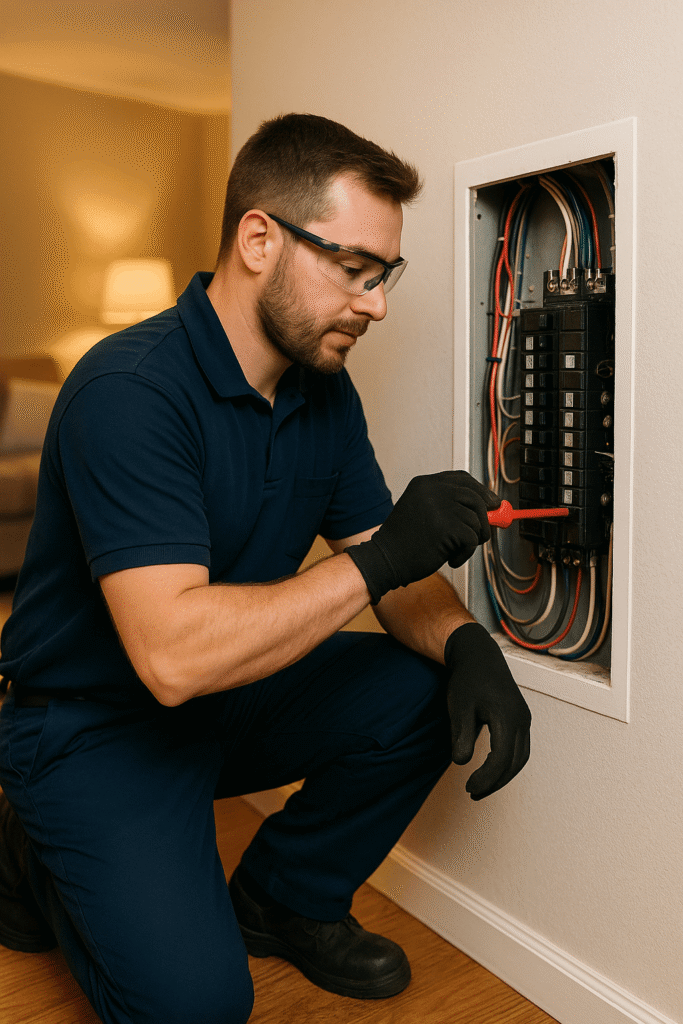
Electrician working on a residential breaker panel

Reasons to Add Electrical Outlets

Many rooms were wired with fewer outlets than people use today. Home offices, kitchens, garages and living areas often end up with power strips and cords running across the floor or under rugs. Extension cords are meant for temporary use, not as a permanent substitute for wiring.

Other common reasons for new outlet installation include power for a new appliance or workbench, outlets for outdoor tools or lighting, moving an outlet hidden behind furniture or cabinets, and adding outlets during a remodel.

Adding an outlet is a different job from replacing one. A replacement usually uses the existing box and wiring. A new outlet needs a new box, new wiring and a suitable source of power, so it takes more planning. If an existing outlet has stopped working, electrical outlet repair is usually the place to start.
Planning Where New Outlets Should Go

Good outlet placement starts with how the space is used today and how it may be used later. We look at a few things before suggesting a location.

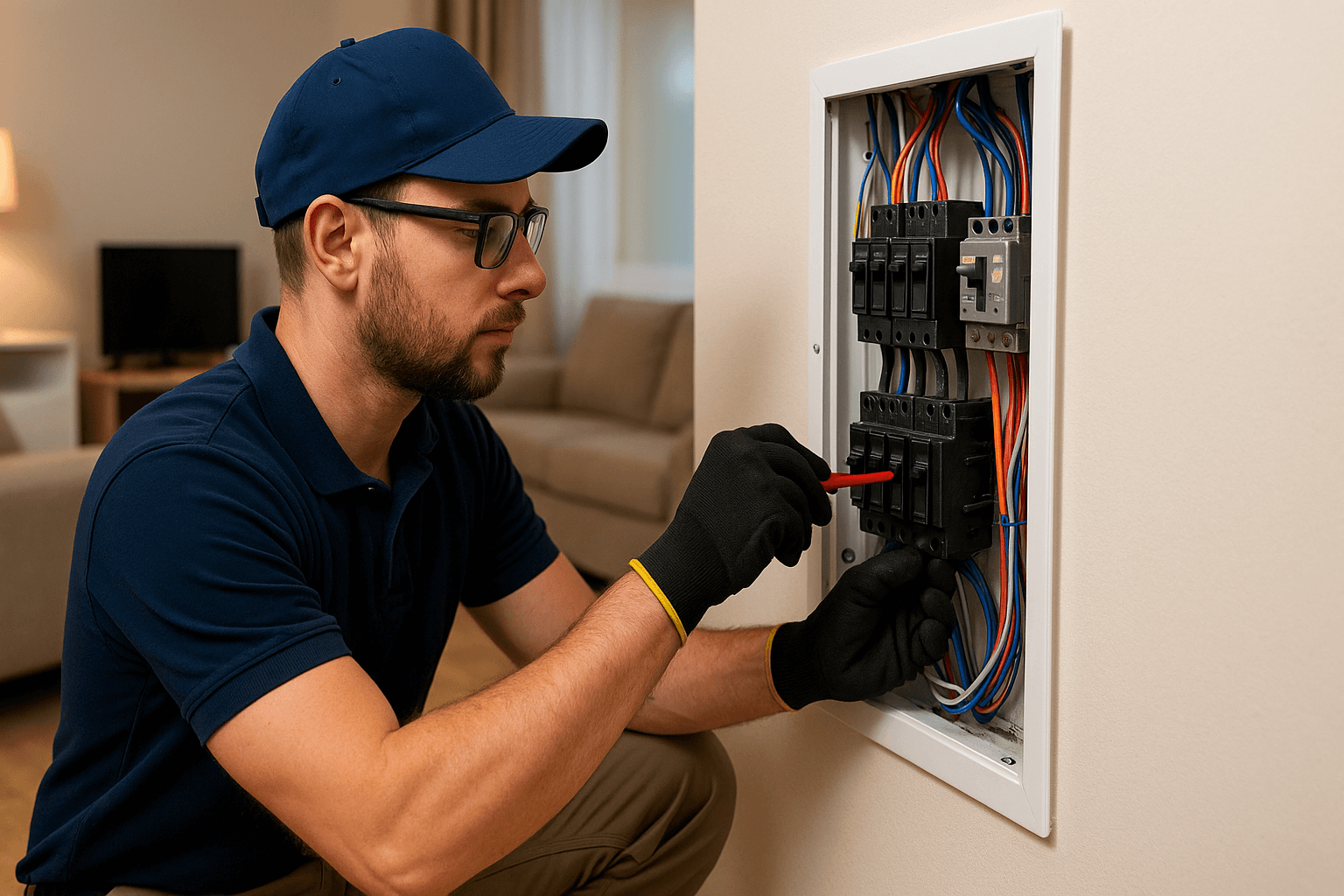
Electrician testing a circuit breaker panel in a home

How You Use the Room

Where furniture sits, where devices charge, and where appliances or tools will be used all affect where outlets are most useful.

Electrician working on wiring inside an electrical panel

The Circuit That Will Supply It

Some new outlets can be added to an existing circuit. Others need a new circuit, depending on the current load and what will be plugged in. We check before deciding.

Electrician checking circuit breakers in a large electrical panel

Location and Conditions

Kitchens, bathrooms, garages, outdoor areas and spots near water can call for specific protection, such as GFCI outlets or weather-resistant covers. Wall construction and access also shape the work.

Circuits and Capacity

Do New Outlets Need a New Circuit?

Not always. An existing circuit may have room for another outlet if it is lightly loaded and the wiring is suitable. But an existing circuit cannot always support more outlets, especially if it already serves several rooms or high-draw appliances.

To judge that, we look at which outlets and lights already share the circuit and what is plugged in regularly. That gives a clearer picture than counting outlets alone.

Equipment that draws a lot of power, such as some kitchen appliances, freezers, space heaters or shop tools, may need a dedicated circuit. That decision depends on the equipment’s requirements and the existing electrical load, not on a single rule.

When a new circuit is needed, the job reaches back to the panel and involves new electrical wiring. We explain what is involved before any work starts, so you know whether you are adding an outlet or a circuit.

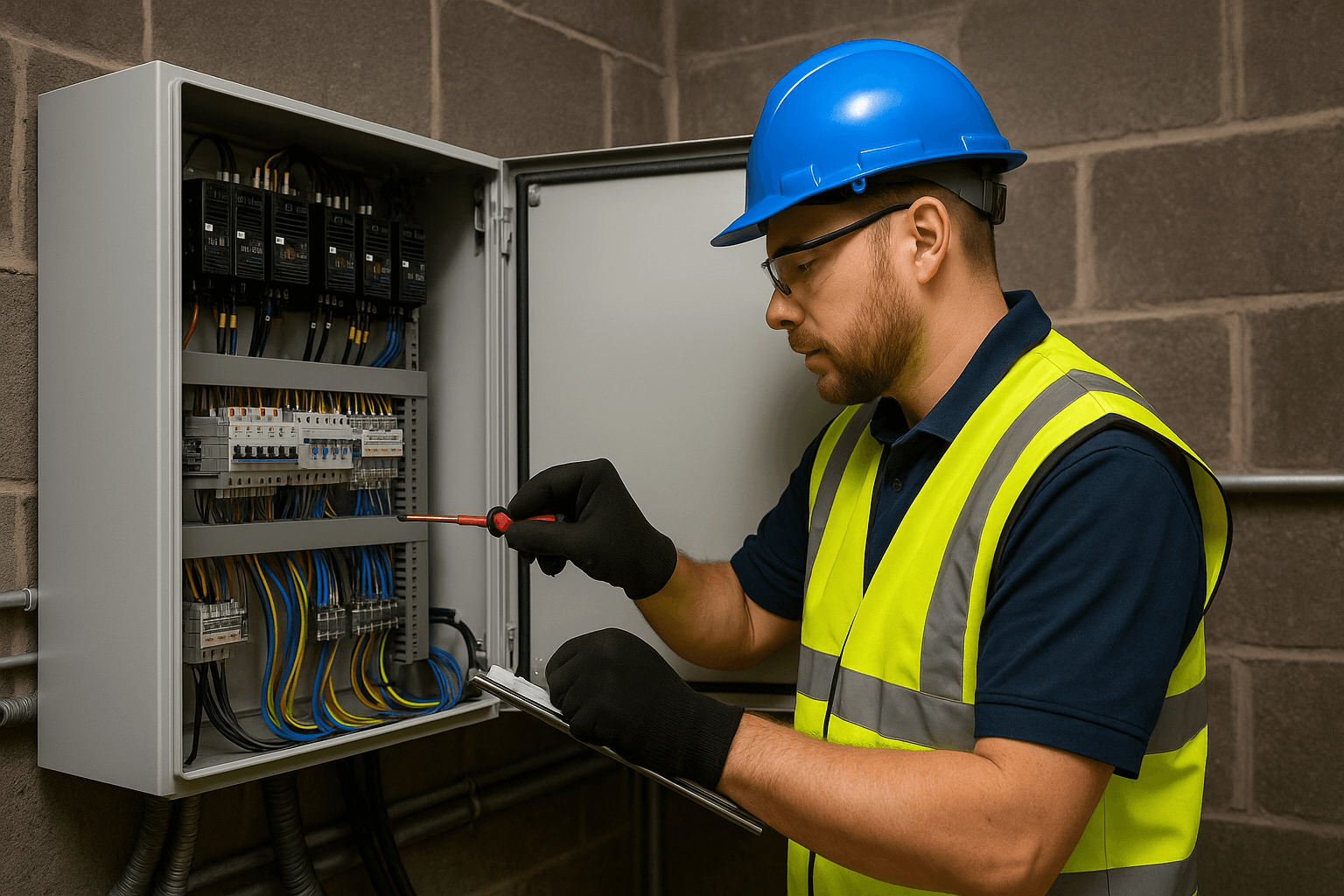
Electrician in a hard hat working inside an electrical panel
Smiling electrician wearing an orange hard hat

Safety and Code Considerations

A new outlet has to suit the place it is installed. Depending on the location, that may mean GFCI protection, tamper-resistant receptacles, weather-resistant devices, or in-use covers outdoors. In homes with young children, the U.S. Consumer Product Safety Commission’s childproofing guide recommends tamper-resistant receptacles when outlets are replaced.

Requirements for outlet type, protection and placement come from the electrical code and local rules, and they differ from room to room. Not every spot is suitable for an outlet, and we don’t rely on one-size-fits-all spacing rules. Electrical work like this may require a permit, and we can tell you whether one applies to your project.

Outlet installation is not a DIY project, because it involves circuit wiring and sometimes the panel. It is part of the electrical work in Salt Lake City we handle for local properties.

FAQs

Electrical Outlet Installation FAQs

Questions to think about before adding or moving outlets.

Not always. The location has to be practical to wire and suitable for the conditions, such as near water or outdoors. If your first choice won’t work, we suggest the closest workable spot.

Some do and some don’t. It depends on what will be plugged in and how much load the existing circuit already carries. We check the circuit before recommending an approach.

Often, depending on the wall and the wiring path. Moving an outlet involves new wiring, so it should be planned and done by a qualified electrician.

Outlets in damp or outdoor locations usually need extra protection, such as GFCI protection and weather-resistant devices or covers. The exact requirements depend on the location.

Extension cords are meant for temporary use. If you rely on them every day, adding outlets where you need them is a better long-term option.

The number of outlets, the wall type and access, whether a new circuit is needed, and any protection the location requires all affect the work. We can give an estimate once we understand the project.

Need Our Help

Discuss New Electrical Outlet Installation With Our Team

Let us know where you would like outlets added or moved and what you plan to plug in. Call 385-290-3821 or email info@electriciansaltlakecityutpro.com.